

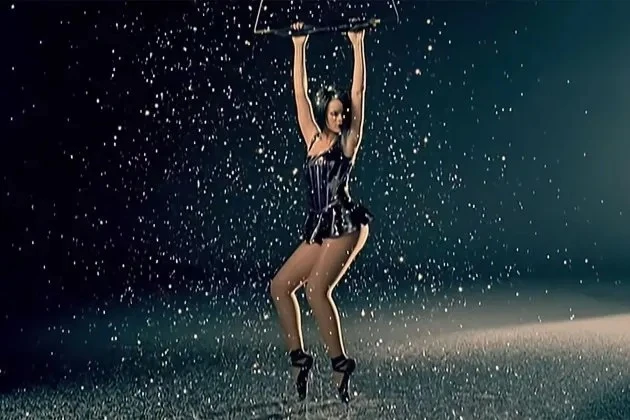
Why Was Rihanna’s “Umbrella” in a Pastor’s Alleged Vision of Hell?
By Rodgers Mangwela
There are stories that make you pause for a moment before scrolling. Then there are stories that make you go back and read the headline twice.
In 2023, one such story exploded across social media: an American pastor claimed that he had experienced Hell during a near-death episode and encountered something almost surreal—a place where demons allegedly sang songs familiar to people on Earth, including Rihanna’s global hit “Umbrella.”
It sounds like the plot of a supernatural movie. But the story did not originate as fiction.
Pastor Gerald Johnson said that he experienced the episode after suffering a heart attack in February 2016. In videos and interviews that later circulated widely online, he described what he believed was a journey to Hell, including disturbing scenes involving demons, suffering souls and music. Several media outlets reported his account in January 2023.
But there is an important distinction that often disappears when such stories become viral.
Johnson said this happened to him. That is verifiable as a statement. The supernatural events he described are not independently verifiable facts.
And that distinction makes the story even more interesting.
The strange connection between Rihanna and Hell “Umbrella” is hardly an obscure song.
Released in 2007 by Rihanna featuring Jay-Z, the song became one of Rihanna's defining international hits. Apple Music lists it as a 2007 release, while the UK's Official Charts records it reaching No. 1 on the UK singles chart.
The song itself is not presented as a song about Hell. Its central imagery is about protection, loyalty and standing beside someone through difficult circumstances. Contemporary reporting on its release described it as a song about the strength of a relationship.
So why did Johnson associate it with Hell?
According to his account, he encountered a section where music was playing. But instead of human performers singing familiar songs, he said demons were singing them.
Johnson specifically mentioned Rihanna's “Umbrella,” along with songs including Bobby McFerrin's “Don't Worry, Be Happy” and Jazmine Sullivan's “Bust Your Windows.” He interpreted the songs as part of the torment experienced by people in Hell.
That bizarre detail became the hook that transformed an already extraordinary religious testimony into an international internet curiosity.
What did Gerald Johnson actually claim?
The viral meme often reduces the story to one sentence: A priest died, went to Hell and heard demons singing Rihanna.
The actual account is more complicated.
Johnson said he suffered a heart attack in 2016 and that his spirit left his physical body. He expected, according to his testimony, to go upward toward Heaven. Instead, he said he descended toward what he believed was the centre of the Earth, which he identified as the location of Hell.
He also described seeing a man on all fours, severely burned and chained, with a demon holding the chain. Johnson interpreted the scene as an example of demonic control and enslavement.
Then came the music.
Johnson said that the music sounded familiar because it was the same music people hear on Earth. His interpretation, however, was that demons were performing the songs in Hell and that the lyrics had become instruments of torment.
It was this combination of familiar pop music and terrifying supernatural imagery that made the story so memorable.
But did Rihanna's song actually play in Hell?
This is where fact-checking becomes essential.
There is evidence that Johnson said he heard “Umbrella” in what he believed was Hell. Multiple media reports from 2023 document his account and quote his explanation of the music.
There is no comparable evidence demonstrating that Rihanna's song was literally being performed by supernatural beings in an afterlife. That distinction should not be buried beneath a sensational headline.
A journalist can accurately report:
“Pastor Gerald Johnson claimed he heard demons singing Rihanna's ‘Umbrella’ during what he described as an experience of Hell.”
It would be substantially different to write:
“Demons in Hell sing Rihanna's ‘Umbrella.’”
The first describes a person's testimony. The second presents an unverifiable supernatural claim as established reality.
For readers of KASONDE24, that distinction is particularly important in an era when dramatic screenshots and short videos can travel much faster than the original evidence.
Was he actually a priest?
There is another detail worth correcting.
Many viral headlines called Johnson a “priest.” However, the reports also identify him as a pastor and lead pastor of Faith Culture Church. CBN, for example, described him as the lead pastor of Faith Culture Church, while other outlets similarly referred to him as a pastor.
So describing him as a “Michigan pastor” is more consistent with the available reporting than simply calling him a priest.
Interestingly, even some media headlines used “priest,” showing how quickly terminology can become distorted when a story moves from one platform to another.
Why did the story become so viral?
Timing played a role.
Johnson's videos began circulating widely online in early 2023, around the period when Rihanna was preparing for her much-anticipated Super Bowl halftime performance. Entertainment publications subsequently picked up the unusual connection between the superstar and the pastor's Hell testimony.
Social media also rewards extraordinary combinations.
A pastor claiming to have seen Hell is already likely to attract attention.
A pastor claiming to have seen demons is even more striking.
Add Rihanna, one of the world's most recognisable music stars, and one of her biggest songs, and the story becomes almost tailor-made for social media.
The result was a perfect viral formula: religion, death, the afterlife, demons, popular music and a global celebrity all packed into one extraordinary claim.
Does the story prove that secular music is demonic?
No.
That conclusion cannot be established from Johnson's testimony. Johnson interpreted his experience through his own religious beliefs and used it to warn people about secular music and the importance of worship. Reports of his comments say he also suggested that drug use by musicians could open them to demonic influence and that music could be used to control people. Those are his religious interpretations, not findings independently established by scientific evidence.
The existence and popularity of “Umbrella” are independently verifiable. The song's release, authorship and chart history can be documented.
The alleged supernatural use of the song cannot be established in the same way.
That is where responsible storytelling matters.
The bigger question: what happens when a personal experience becomes internet “fact”?
Perhaps the most fascinating part of this entire story is not whether Rihanna's song was heard in Hell.
It is what happened after Johnson told people that he believed he had heard it there.
A personal testimony became a headline. The headline became a social-media post. The post became a meme. Eventually, many readers encountered the meme without ever seeing Johnson's original explanation.
With every retelling, small details changed.
“Pastor” became “priest.”
“Claimed to have experienced Hell” became “went to Hell.”
A description of hearing particular songs became “demons constantly singing Rihanna.”
The transformation is a useful lesson in digital literacy.
Before sharing an extraordinary claim, ask three simple questions:
Who originally made the claim?
What exactly did that person say?
And what evidence exists independently of the person's testimony?
Those questions do not require anyone to dismiss another person's faith or personal experience. They simply separate testimony from evidence.
And perhaps that is the real lesson hidden inside the strange story of Rihanna's “Umbrella” and the alleged soundtrack of Hell.
The story is undeniably fascinating. Johnson genuinely made the claim, and reputable outlets documented what he said.
But whether the place he described was actually Hell, whether demons were really singing, and whether Rihanna's song somehow existed in an afterlife remain matters of belief rather than independently demonstrated fact.
For KASONDE24 readers, that distinction turns a bizarre viral story into something more valuable: a lesson in how to follow extraordinary claims without confusing a compelling testimony with proven reality.
Author: Rodgers Mangwela

























Comments