

ZAMBIA EXPLAINS
THE INDIAN CHEF WHO BROUGHT CURRY TO AMERICA – THEN VANISHED
Article by Rodgers Mangwela | KASONDE24
Imagine introducing an entirely unfamiliar cuisine to a foreign country, becoming a celebrated personality, opening a restaurant in one of the world's most influential cities and then disappearing so completely that future generations are left wondering what happened to you.
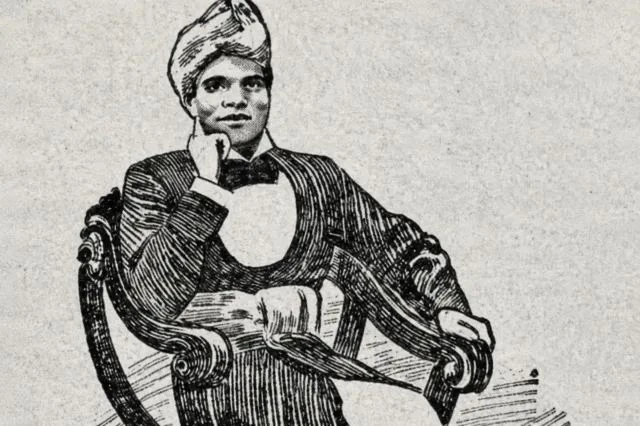
This is not the plot of a Hollywood movie. It is the extraordinary story of Ranji Smile, an Indian chef whose ambition, culinary talent, theatrical personality and controversial lifestyle helped introduce Indian cuisine to American diners more than a century ago.
Today, Indian restaurants can be found across the United States, serving millions of customers. But behind this global culinary success is an intriguing early chapter involving a man whose real identity remains uncertain and whose final whereabouts became a mystery.
His story offers fascinating lessons about entrepreneurship, cultural exchange, personal branding and the complicated relationship between fame and reputation.
WHO WAS RANJI SMILE?
In the summer of 1899, a man known as Ranji Smile travelled from London to New York.
Very little is known about his early life, including his actual name and precise origins. Historians believe that the name Ranji may have been inspired by K.S. Ranjitsinhji, the famous Indian cricket player who enjoyed considerable popularity in Britain at the time. Smile, meanwhile, may have been an anglicised version of the name Ismail.
After arriving in America, he reportedly adopted another name: Joe.
Before crossing the Atlantic, Smile had worked as a curry cook at London's prestigious Cecil and Savoy hotels. His culinary abilities attracted attention, eventually opening an opportunity to work at Sherry's Restaurant, an exclusive dining establishment on Fifth Avenue in New York.
At the time, American diners had relatively limited exposure to authentic Indian cooking. Curry was not yet the familiar international dish that many Americans enjoy today.
Smile arrived at an interesting moment when American society was developing greater curiosity about Indian culture, traditions and cuisine.
HOW CURRY FOUND ITS WAY INTO AMERICAN DINING
Ranji Smile's arrival was part of a much longer history of Indian food travelling beyond the Indian subcontinent.
Indian cuisine had already reached Britain decades earlier. In 1810, Sake Dean Mahomed, an Indian entrepreneur, opened the Hindostanee Coffee House in London, introducing customers to Indian dishes and hookah culture.
By the end of the nineteenth century, Indian food was becoming increasingly familiar in parts of Britain.
America, however, was a different market.
At Sherry's Restaurant, Smile helped introduce wealthy New Yorkers to Indian culinary traditions. His cooking was accompanied by an unusual theatrical presentation. He reportedly wore colourful clothing, including a blue silk turban, and entertained customers while preparing dishes.
His personality made him more than an ordinary kitchen employee. He became part of the attraction.
His popularity demonstrated something important about the food business: people do not always buy food simply because they are hungry. They can also be attracted by culture, presentation, storytelling and the experience surrounding a meal.
OMAR KHAYYAM: THE RESTAURANT THAT CHANGED EVERYTHING
In 1901, Smile decided to establish his own Indian restaurant.
With financial backing from American financier Roland R. Conklin, he opened a restaurant called Omar Khayyam at 325 Fifth Avenue in Manhattan.
The establishment was designed to offer customers an experience associated with India. Its interior featured Indian decorations, while turbaned waiters and musicians contributed to the atmosphere.
It was an ambitious business idea.
However, the restaurant struggled to attract enough customers and reportedly closed within approximately a year.
Despite its short existence, Omar Khayyam occupies an interesting place in American food history. It was probably the first dedicated Indian restaurant in the United States.
Smile had managed to introduce a new culinary experience to an unfamiliar market, but introducing something new does not automatically guarantee commercial success.
This is a lesson that entrepreneurs in Zambia, Kabwe and Katondo can appreciate. A good business idea needs more than excitement. It requires market understanding, customer loyalty, financial discipline and the ability to adapt.
FROM CELEBRITY CHEF TO CONTROVERSIAL PRINCE
Perhaps the most extraordinary part of Smile's story was his ability to reinvent himself.
After his restaurant venture struggled, he began presenting himself as Prince Joe Ranji Smile, allegedly the son of the emir of Baluchistan.
There was a problem: the royal identity he promoted was fabricated.
His activities attracted further controversy when American authorities investigated allegations that he had arranged to bring foreign workers into the country illegally for his restaurant.
A federal case nearly resulted in his deportation, although Smile avoided that outcome. Some members of his entourage were not as fortunate.
Rather than quietly returning to an ordinary culinary career, Smile continued travelling and reinventing his public identity.
He conducted Indian cooking demonstrations in different American cities, entertaining audiences with food and performances.
He also made extraordinary claims about Indian food, including suggestions that eating his dishes could improve women's beauty and complexion.
His growing appetite for publicity eventually became part of his downfall.
THE MYSTERIOUS DISAPPEARANCE
As the years passed, Smile's reputation became increasingly complicated.
His public activities attracted legal difficulties and negative attention. Newspaper accounts also documented controversies involving women and financial disputes.
By the 1920s, he appeared to have abandoned professional cooking and was reportedly describing himself as a merchant.
The last known evidence of his life comes from 1937.
According to historical accounts, one of his later American wives approached the New York Supreme Court seeking an annulment of their marriage after her husband had disappeared.
After that, the historical trail becomes uncertain.
Nobody has established a definitive account of what happened to Ranji Smile or where he spent his final years.
A man who had once attracted newspaper headlines and introduced thousands of Americans to Indian cooking had effectively vanished from public life.
HIS LEGACY LIVED LONGER THAN HIS RESTAURANT
Although Omar Khayyam failed commercially, Smile's story did not end with the closure of his restaurant.
Other South Asian immigrants continued introducing Indian cuisine to American audiences.
In 1909, Saint Nihal Singh, a journalist from Punjab, introduced readers of the Chicago Daily Tribune to Indian recipes, including bhajias, puris and halwa.
In 1913, another entrepreneur, K.Y. Kira, opened an Indian restaurant in Harlem, New York. His establishment, eventually known as the Ceylon India Inn, became considerably more successful than Smile's restaurant.
It attracted Indian expatriates, political activists and eventually prominent entertainment personalities. The restaurant reportedly continued operating until the late 1980s.
Today, Indian cuisine is firmly established in American food culture, with restaurants operating in cities and communities throughout the country.
Ranji Smile may not have enjoyed the lasting commercial success of those who followed him, but his early experiment helped create a foundation for something much bigger.
WHAT AFRICA AND ZAMBIA CAN LEARN FROM THIS STORY
There is an important lesson here for African entrepreneurs, particularly those working in the creative industries, hospitality, tourism and food businesses.
Sometimes, the person who introduces an idea to a market is not necessarily the person who benefits most financially from its eventual success.
Ranji Smile introduced an unfamiliar culinary experience to American diners, but his business struggled. Others later developed the opportunity into sustainable enterprises.
For Zambia, this raises an interesting question: how many local products, traditional recipes, cultural practices and creative ideas remain largely unknown beyond our borders?
From traditional Zambian foods to music, literature, fashion and tourism, there are opportunities to introduce our cultural identity to international audiences.
A traditional meal prepared in Katondo or Kabwe could become an international culinary experience if someone understands how to preserve its authenticity while presenting it to a wider market.
However, Smile's story also reminds entrepreneurs that reputation matters. Personal branding can attract attention, but dishonesty and questionable business practices can destroy trust.
A good idea may open the door, but integrity, consistency and sound business practices determine whether the opportunity survives.
Ranji Smile's life remains a fascinating reminder that history is not always shaped by people who become wealthy or famous. Sometimes, it is shaped by individuals whose experiments fail, whose names are forgotten, but whose ideas continue influencing the world long after they disappear.
The Indian chef who brought curry to America may have vanished, but the culinary legacy of his generation remains visible on American streets more than 125 years later.
published by KASONDE24









Comments